Penn State Altoona student Madison Kennedy received the Best in Symposium award for her research poster presentation, “A Novel Squircle Lattice Topology for Lightweight Structures with Superior Mechanical Performance,” at the 2026 Multi-Campus Research Experience for Undergraduates Symposium, held in July at University Park.
Three Penn State alumni now working at the Institute of Energy and the Environment are using the hands-on experiences, mentorship and technical training they gained as students to advance environmental research.
John Eicher, associate professor of history, won the triennial Charles R. Bailey Memorial Prize from the New York State Association of European Historians for his article “A Provincial Pandemic: European Ignorance of the 1918 ‘Spanish’ Influenza as a Shared Event,” published in Contemporary European History.
Scientists at SLAC National Accelerator Laboratory, alongside two researchers from Penn State, have demonstrated the importance of generating highly reproducible experimental data when building artificial intelligence models for catalyst investigations, a framework that can help guide the reactions that do things like turn carbon dioxide into valuable fuel.
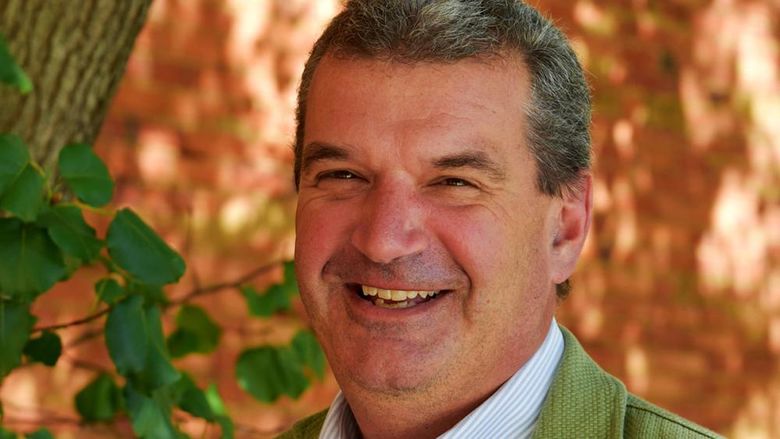
Penn State University Libraries’ Open Publishing program has launched “The Book of Jobs: Poems About Work,” a new open access monograph edited by Erin Murphy, professor of English at Penn State Altoona and the 2026-27 Penn State Laureate.
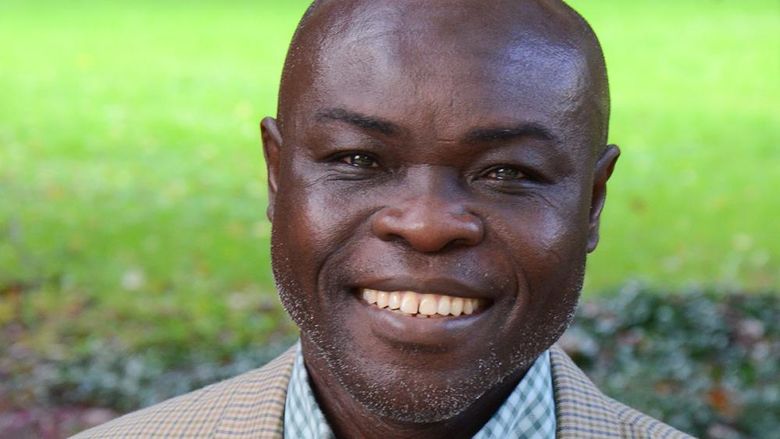
Kofi Adu, professor of physics at Penn State Altoona and graduate faculty member in the Department of Materials Science and Engineering at Penn State University Park, has been awarded a Fulbright scholarship for STEM research and education in the department of physics at the University for Development Studies in the Northern Region of Ghana beginning this fall.
Thirty-one students earned Discovery Grants to help fund their summer research and projects, gaining the opportunity for valuable experience in the field, in the lab and abroad.
Liliana DeMarco and Ally Black, students from Penn State Altoona's Integrated Social Science Research Lab, presented at the recent annual conference of the Northeastern Association of Criminal Justice Sciences held in Dewey, Delaware.